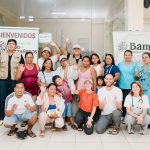
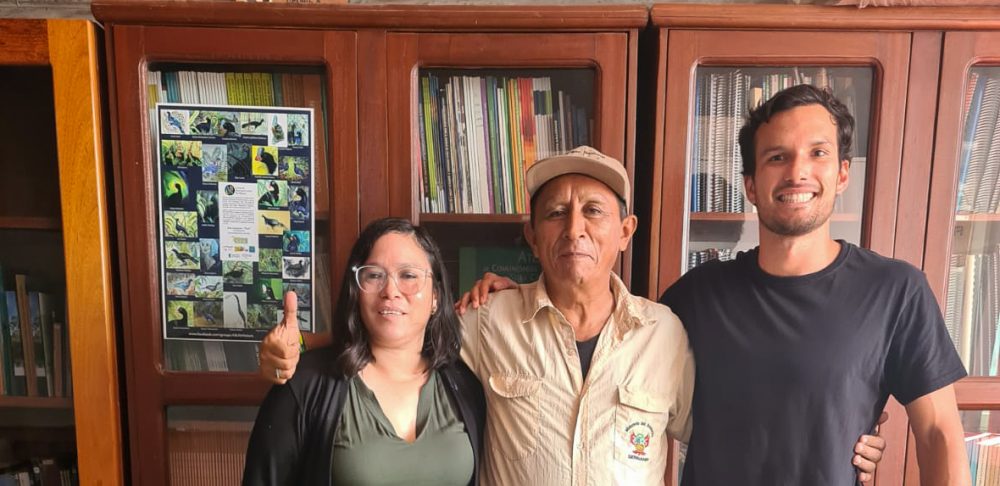
Last Friday, October 20, Bosques Amazónicos (BAM) and the Alto Purús National Park (PNAP) signed a 3-year cooperation agreement with the objective of strengthening the monitoring of the areas protected by the PNAP and BAM, the management of natural resources of importance to local populations, as well as environmental communication and education with the main...
The problem: deforestation and degradation of high-value native species Peru has an amazing diversity of native forest species of great value, which have evolved over the centuries in its different ecosystems. Unfortunately, this biological wealth is being threatened in our country due to the increasing deforestation and degradation of our forests. On the one hand,...
In a world where concern about climate change is on the rise, it is essential for companies to play an active role in the protection and conservation of our natural resources. In this regard, Bosques Amazónicos (BAM) stands out for its commitment to research and conservation of nature in our Amazon. In this article, we...
In the fascinating world of herpetology, one species that deserves our attention is the frog Scinax pyroinguinis, also called “groins of fire frog”. These amphibious creatures have a unique beauty and an interesting history to explore. According to the official study published in Evolutionary Systems, Scinax tree frogs are among the most diverse clades of...
A clonal nursery is a place where plants are grown and reproduced asexually, using specific parts of a parent plant to generate new, genetically identical plants, known as clones. The main function of a clonal nursery in the agricultural and forestry industry is to produce plants with specific genetic characteristics and qualities in a consistent...
During one of the biodiversity assessment expeditions conducted as part of the BAM’s Science Program to the protected forests under the REDD+ The Last Habitat conservation project in Ucayali, scientists discovered a new species of frog: Scinax pyroinguinis, whose Latin name means “frog of fire groins” because of the bright orange spots that decorate its...
BAM’s SCIENCE PROGRAM Learn about the extraordinary results of the 300 camera traps installed in the forests conserved under BAM’s REDD+ The Last Habitat project. Discover animals like the añuje, the jaguar and many more! As part of the BAM Science Program and within the framework of the strategic alliance with the San Diego Zoo,...
SCIENCE AND COMMUNITY On April 28th, a group conformed by REDD+ Brazil nut concession project partners and children of project partners entered the Brazil nut forests of Marita Vargas, concessionaire member of the REDD+ project. The purpose was to join a team of scientists from the Natural History Museum of the Universidad Mayor de San...
As part of BAM’s Science Program and within the framework of the strategic alliance with the San Diego Zoo, we installed 300 camera traps in the jungles of our property (Ucayali, Peru) in order to record, identify and quantify the diversity of fauna species found in our forests. The area evaluated is part of the...
March, 2022 In line with our commitment to conservation, and within the framework of our Science Program, we conducted a new scientific evaluation; this time in the Brazil nut forests located in Nuevo Paraíso; part of the area protected by the REDD+ Brazil Nut Concessions conservation project developed by BAM in Madre de Dios. This...